
NeuroQueer
Stories by us for us. Representing LGBTQI+ Neurodivergent Identities
This resource explores what it means to be both neurodivergent and LGBTQI+, two identities are rarely talked about together.
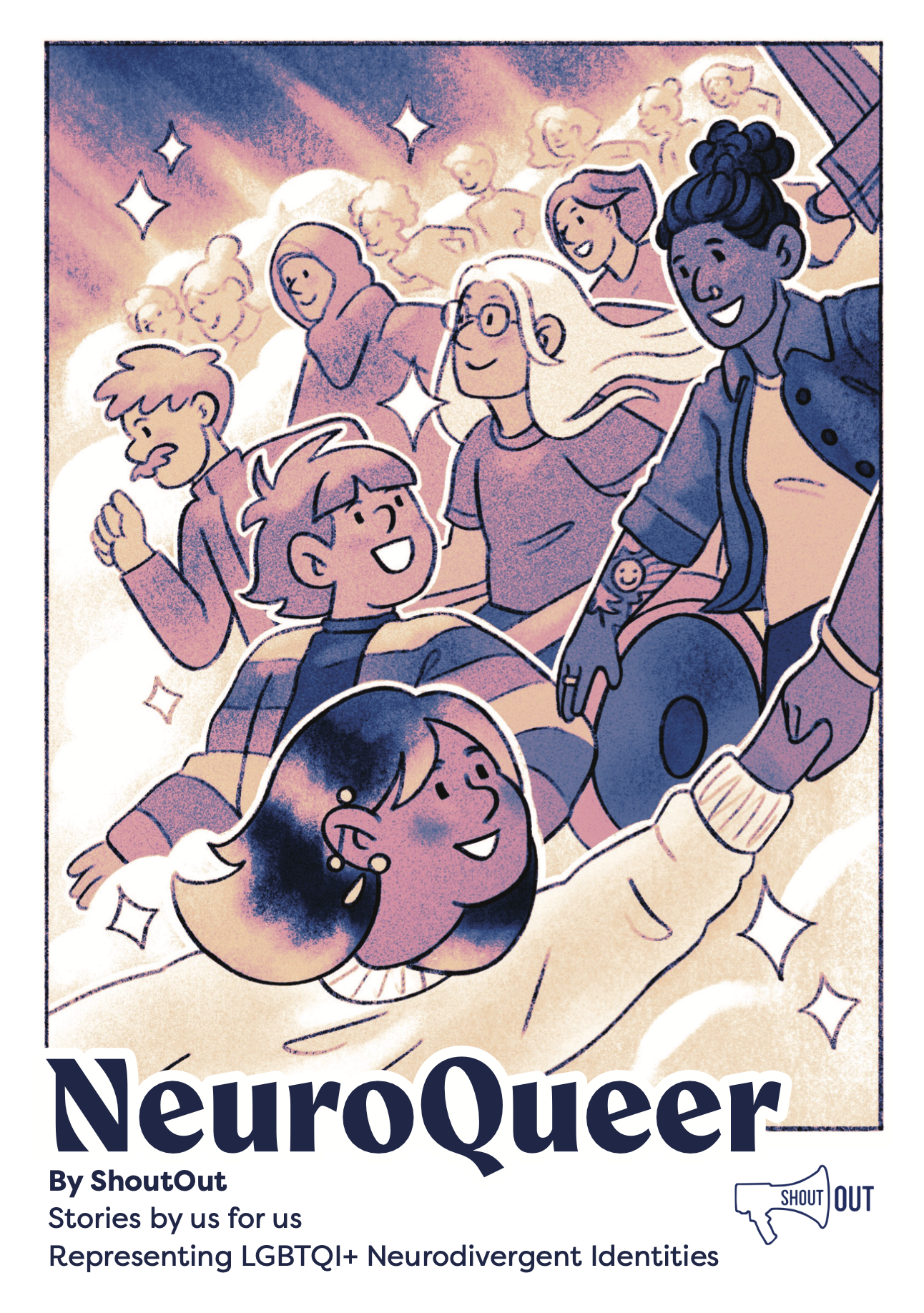
Illustrations by Katelyn McKenna
This resource is by queer neurodivergent people, for queer neurodivergent people. It’s a space where our identities aren’t treated as problems to solve, phases to grow out of, or things that need to be “cured”.
In this booklet, you’ll find real stories from queer neurodivergent people in Ireland, alongside practical tools, myth-busting, and places to find support. Everyone’s experience is different, and there is no one “right” way to be neurodivergent or LGBTQI+.
This is a resource many of us wish we had growing up.
We want this information to reach as many people as possible! If you think your school, organisation, library, youth group, event or home would enjoy reading NeuroQueer in physical format, email education@shoutout.ie and we’ll post it to you for free!
This resource was developed with the support by the Department of Children, Disability and Equality’s LGBTI+ Community Services Fund 2025.
Common Neurotypes
-
Attention Deficit Hyperactivity Disorder (ADHD) is another lifelong neurodiverse variation that affects concentration, impulsiveness and attention. It doesn't mean someone is constantly distracted, but they may find it harder to control their attention or direct it to certain tasks. Someone with ADHD may 'hyperfocus' on a certain subject they enjoy but find it hard to complete or finish tasks. People with ADHD might struggle with controlling their emotions (known as emotional dysregulation), as well as sitting still, regulating the volume of their voice, or may feel like they're 'on the go' often.
-
Autism is a lifelong developmental disability or difference which relates to how a person communicates and interacts with others, and how they experience the world around them. Autism exists on a spectrum, which means it affects people in different ways, at different times, in different situations. Differences typically show up in the following areas: Communication, Social interaction, Repetitive and restrictive patterns of behaviour and Sensory processing.
-
Dyslexia is a learning difference that can cause difficulties with learning and work. Dyslexia occurs on a spectrum so not everyone will experience it in the same way. A dyslexic person may experience difficulties with reading, spelling and writing and other related cognitive/processing difficulties.
-
Dyspraxia is a neurodiverse variation that affects movement and coordination. Dyspraxic people may struggle with riding a bicycle and playing sports, while also struggling with fine motor skills like writing and tying shoelaces. Dyspraxia doesn’t only affect movement; someone with dyspraxia may also struggle with spatial awareness and direction, sensitivity to certain clothes/textures, and some people may have delayed speech/find it difficult to speak clearly.